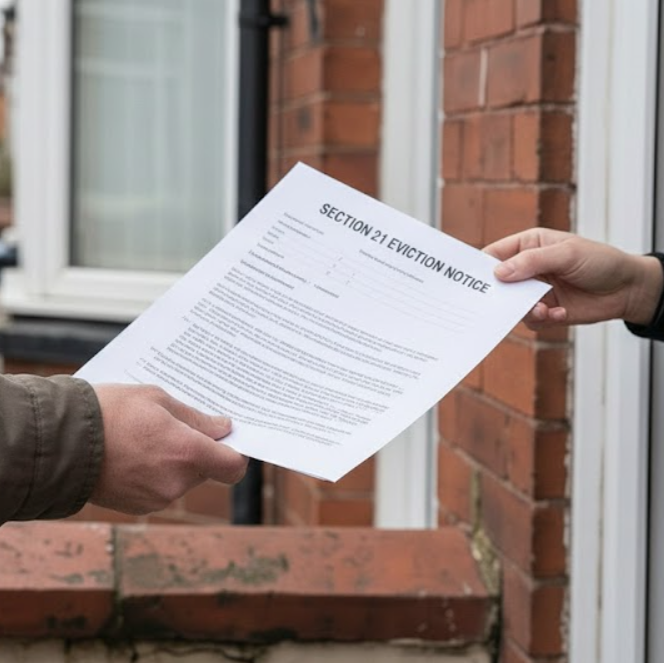
The Government has now confirmed its implementation plans for both Awaab’s Law and the Renters’ Rights Act 2025. These developments will significantly reshape the renting landscape over the next few years.
While many landlords will understandably be concerned about what lies ahead, it is important to note that Section 21 remains fully in force for now, and no immediate changes are required.
Below, we outline the key updates and what landlords need to be aware of at this stage. If you have any questions, you can contact us by completing the enquiry form or by calling 0151 666 9090.
Abolition of Section 21: What Has Been Announced?
The Renters’ Rights Act 2025 has passed through Parliament and received Royal Assent. The Government has confirmed that the abolition of Section 21 “no-fault” evictions will take effect on 1 May 2026.
From that date, all new and existing private rented sector tenancies will convert into assured periodic tenancies, and landlords will only be able to seek possession using the Section 8 route.
For the moment, however:
- Section 21 notices remain valid.
- Landlords can continue to issue Section 21 notices as normal.
- No transitional restrictions have been introduced at this time.
We will continue to monitor the Government’s updates closely and will provide further guidance as implementation approaches.
Awaab’s Law: What Landlords Need to Know
Awaab’s Law, introduced in memory of two-year-old Awaab Ishak, places strict legal timeframes on social landlords to investigate and resolve damp, mould, and other serious housing hazards. Although the law initially applies only to the social housing sector from 27 October 2025, the Government has confirmed that it intends to extend Awaab’s Law to the private rented sector as part of Phase 3 of the Renters’ Rights Act reforms.
The Government will consult on how this will work in practice and has not yet confirmed when the private rented sector requirements will come into force. However, the roadmap indicates this will follow after late 2026.
The full Government guidance on Awaab’s Law for social landlords, which sets out detailed timelines and requirements, can be found in the recently updated regulations.
Government Implementation Roadmap
The latest guidance published by the Department for Levelling Up, Housing & Communities outlines a phased introduction of the reforms:
- 27 October 2025: Awaab’s Law comes into force for social landlords.
- 1 May 2026: Abolition of Section 21 and introduction of assured periodic tenancies.
- Late 2026: Launch of the PRS Database and the PRS Landlord Ombudsman.
- 2027–2028: Reforms extend to the social rented sector and mandatory ombudsman membership begins.
- Phase 3 (date to be confirmed): Awaab’s Law and the Decent Homes Standard applied to the private rented sector.
For more detail, the Government’s implementation roadmap is available here:
What Should Landlords Do Now?
At this stage, no immediate action is required. The key messages for landlords are:
- Section 21 remains valid and unchanged.
- The new periodic tenancy regime will not take effect until May 2026.
- Awaab’s Law does not apply to private landlords yet.
- Further consultations and detailed regulations are expected throughout 2026.
However, landlords may wish to begin reviewing their current processes, particularly around property condition, repairs, and record-keeping — all areas expected to face clearer scrutiny under the new regime.
Percy Hughes & Roberts Are Monitoring Developments Closely
Percy Hughes & Roberts will continue to track all legislative updates affecting the private rented sector. Once the Government publishes the detailed regulations for Phase 1 reforms, we will provide further guidance to help landlords prepare.
If you have any questions about Section 21, possession routes, or how the upcoming reforms may affect your properties, our specialist landlord solicitors are here to help. You can contact us by completing the enquiry form or by calling 0151 666 9090.
Related Articles